Ann Huang
PhD Candidate in Computational Neuroscience & AI, Harvard University

annhuang@g.harvard.edu
Cambridge, MA, 02139
Hi there! I’m Ann, a fourth-year PhD student in computational neuroscience and AI at Harvard University and the Kempner Institute, supported by the Kempner Graduate Fellowship.
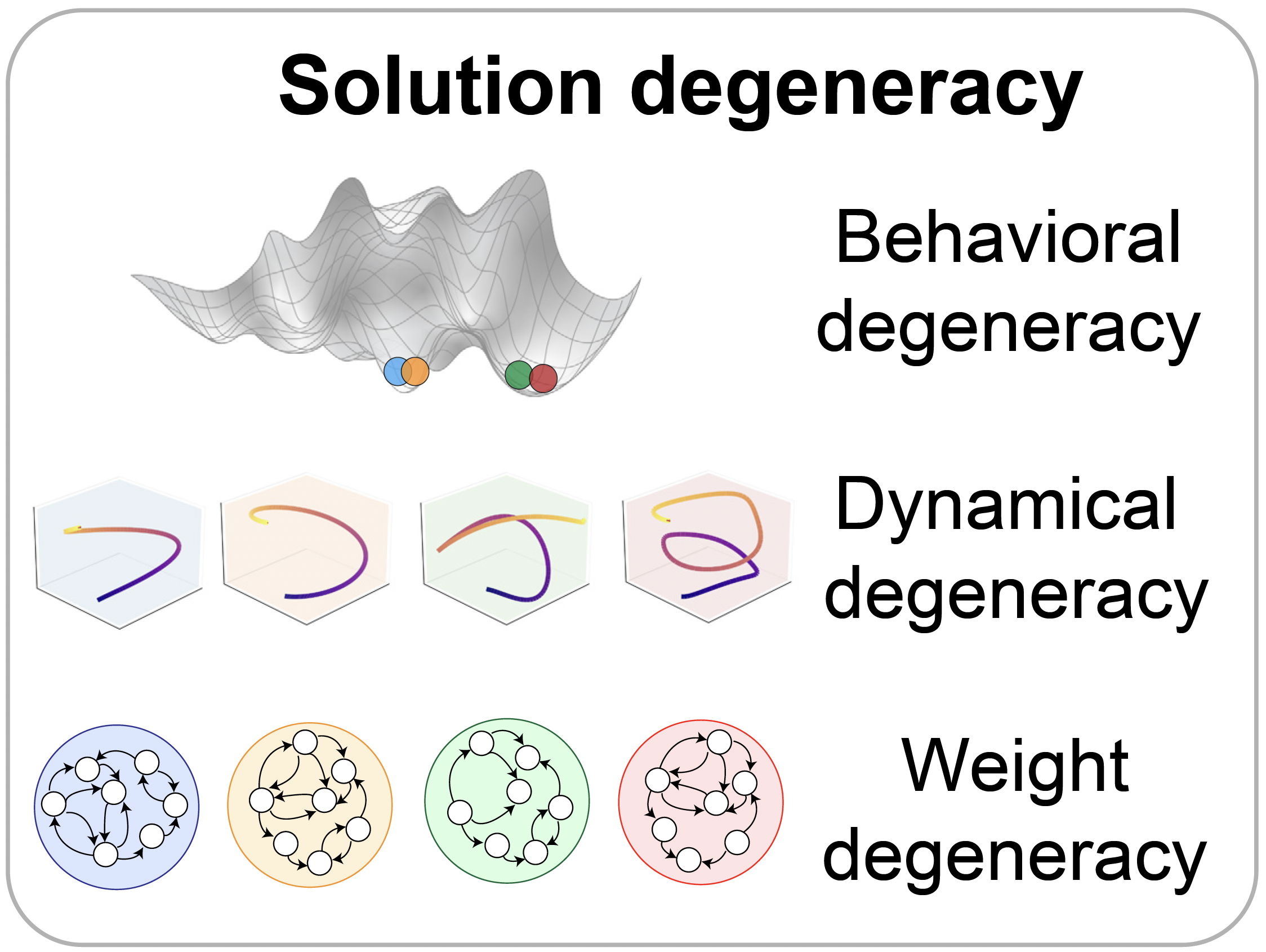
My research lies at the intersection of representation learning, interpretability, and dynamical systems theory, guided by three recurring themes. (1) System identifiability: I develop methods and theory to identify and steer the computations implemented by artificial and biological neural networks. In particular, I study under-specification: when a task or training objective admits many models with the same performance but different internal mechanisms. (2) Representational alignment: I design metrics that compare computations across systems by their dynamics — how internal states evolve in time and how they respond to inputs. (3) Training dynamics: I combine theory and experiment to study how curriculum learning speeds up learning and steers networks away from bad minima, and how training shapes models’ representations and selects among the many solutions a task admits. Ultimately, I aim to translate our mechanistic understandings of deep learning models into more efficient training and safer models that are robust to adversarial attacks and reward hacking.
Outside research, I enjoy skiing, hiking, climbing, reading, travelling, listening to rock music and attending concerts.
I’m always happy to chat about research and life, brainstorm, and collaborate. Reach me at annhuang@g.harvard.edu. If you are an undergrad seeking advice on grad school applications, navigating research opportunities, or figuring out whether a PhD is right for you, feel free to drop me an email too.
news
| Oct 09, 2026 | I gave a lab meeting to the tinlab and the broader Linguistics and AI communities at Boston University, titled "Many Solutions to the Same Task: Identifiability in Trained Neural Networks". It was a great pleasure chatting with everyone after the talk! |
|---|---|
| Oct 01, 2026 | Our new paper "Traversing the solution space of neural networks with Hessian Null Space Continuation" is on arXiv! See the paper here and the project website here 💙 |
| Sep 28, 2026 | Our paper "Effectiveness of Curriculum Learning Depends on Reward Sparsity and Competing Optima" has been accepted at NeurIPS 2026! 🇦🇺 |
| Aug 05, 2026 | I'll be giving a talk on our recent work developing Hessian Null Space Continuation, a scalable method for traversing functionally equivalent networks with distinct internal mechanisms, at the New England Mechanistic Interpretability (NEMI) workshop! See our abstract on its website. |
| Apr 06, 2026 | I gave a talk titled "System identifiability in artificial and biological neural circuits" at the Emergence of Intelligent Phenomena journal club at Harvard & the Kempner Institute! |
| Feb 13, 2026 | I gave a talk on InputDSA at the Harvard Medical School Friday Seminar Series! |
| Jan 26, 2026 | Our InputDSA was accepted to ICLR 2026! |
| Dec 21, 2025 | 🎉 Our InputDSA was selected for a talk at COSYNE 2026 (~2.5%)! If you wanna chat about neural dynamics, interpreting RL agents, representional alignment, learning dynamics and curriculum at the conference, please reach out! 🇵🇹 |
| Dec 01, 2025 | In San Diego for NeurIPS 2025, presenting our Degeneracy in RNNs work at the main conference, and as a Spotlight talk at the NeurReps workshop! |
| Oct 29, 2025 | Our new paper InputDSA: Demixing then Comparing Recurrent and Externally Driven Dynamics is now on arXiv! Thanks to my amazing collaborators from the Rajan and Fiete Group, especially my co first-author Mitchell Ostrow. |
| Sep 28, 2025 | ✨ Our paper Measuring and Controlling Solution Degeneracy across Task-Trained Recurrent Neural Networks has been accepted as a Spotlight at NeurIPS 2025! |
selected publications
-
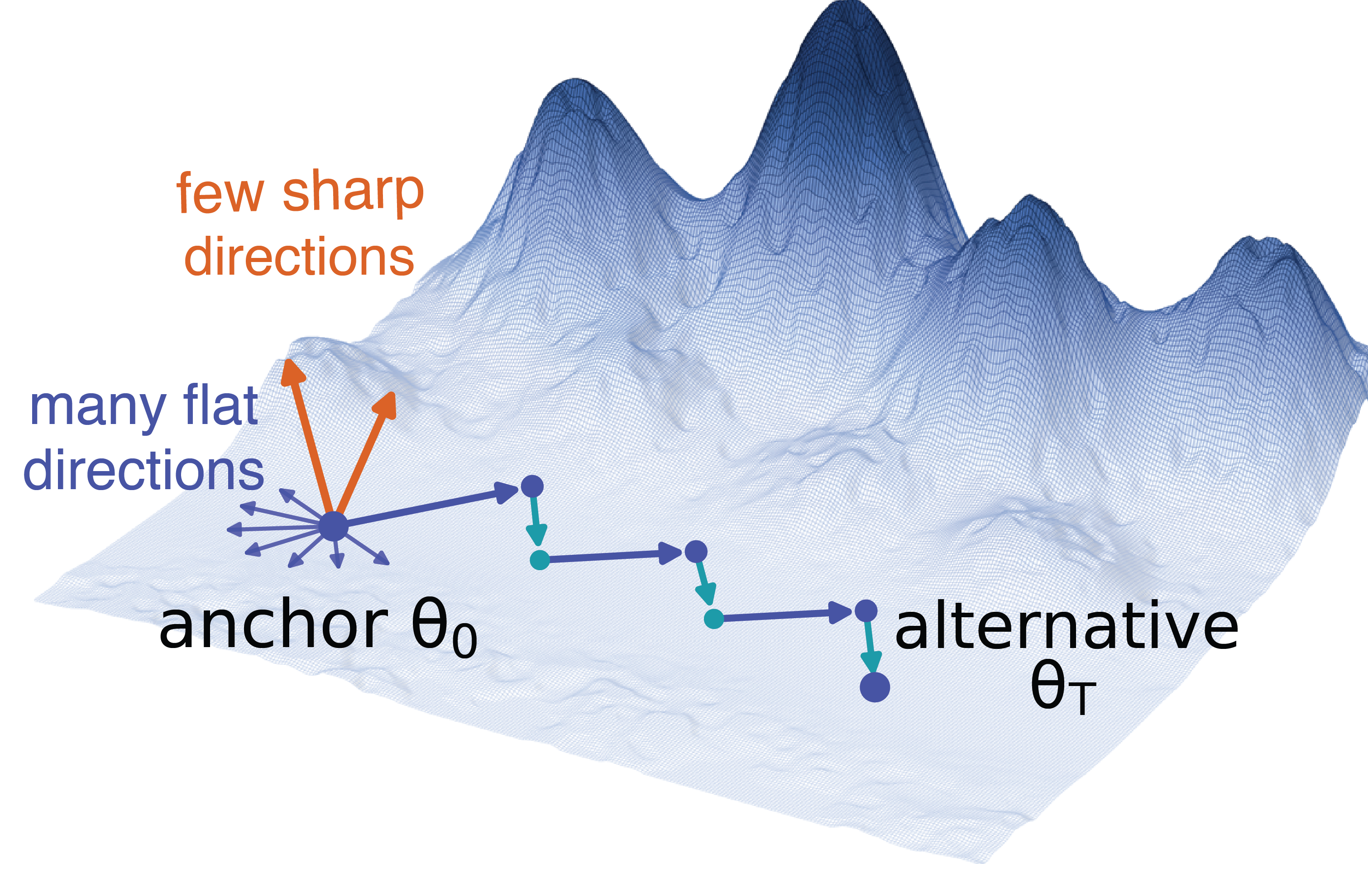 Traversing the solution space of neural networks with Hessian Null Space ContinuationarXiv, 2026
 -
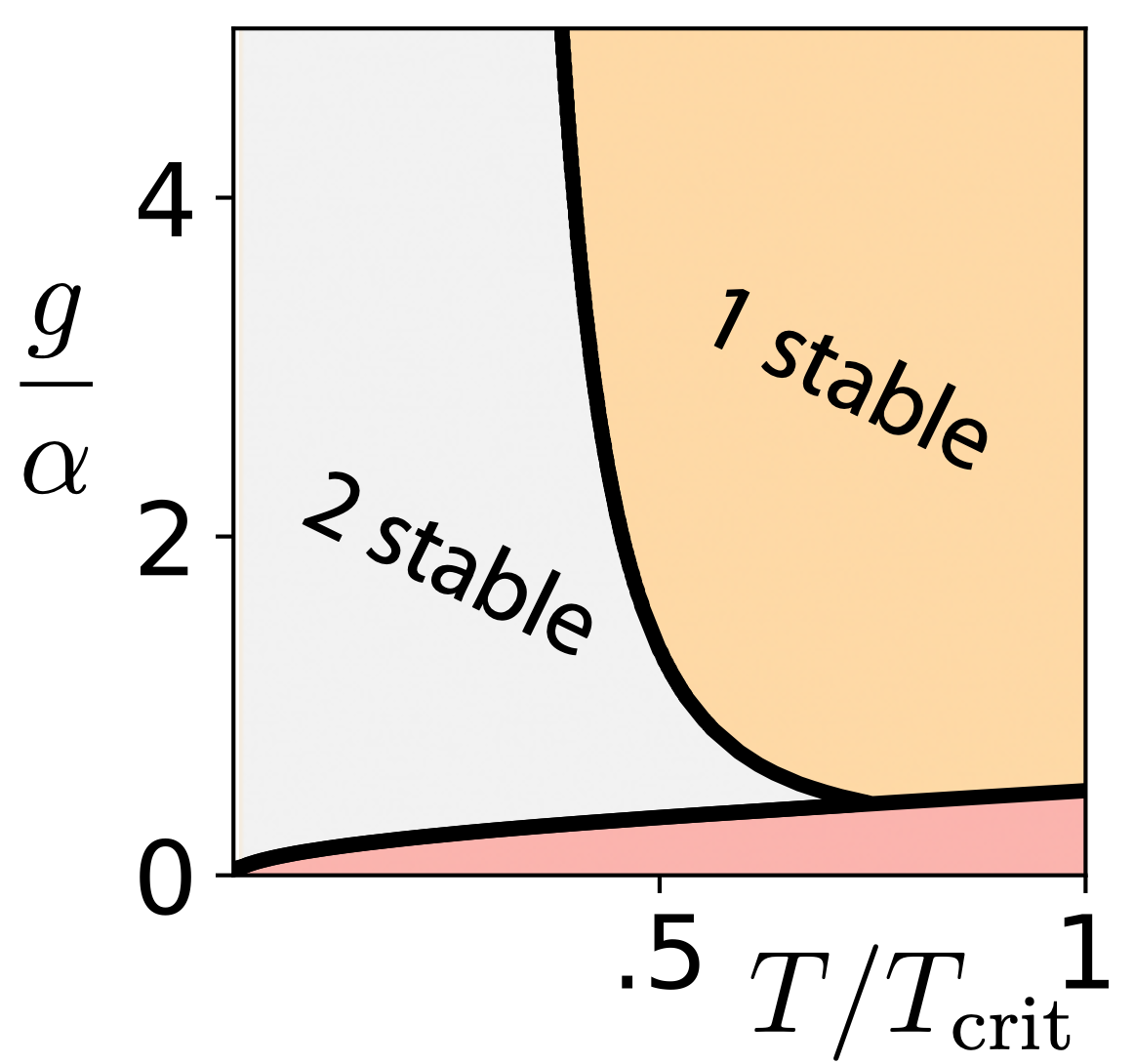 Effectiveness of Curriculum Learning Depends on Reward Sparsity and Competing OptimaIn NeurIPS, 2026